use case | logistics
Wi-Fi for warehouses without the access-point forest.
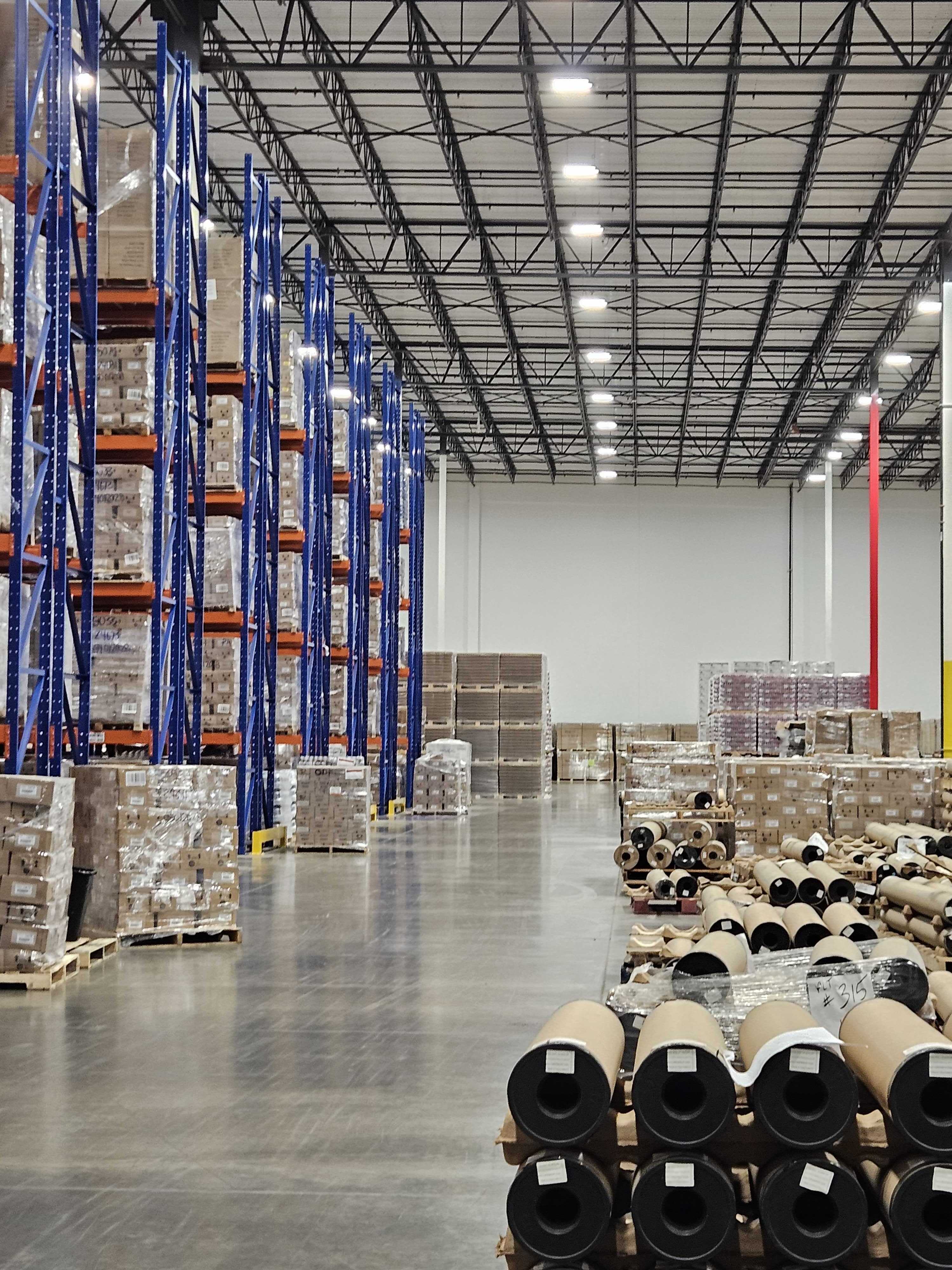
Racking, steel, forklifts, and mezzanines make warehouses a hard RF environment: ceiling-mounted access points, dead zones behind full bays, and scanners that drop mid-pick. Apogee Hybrid Polarization is built for exactly this. When one polarity is blocked or reflected, the other carries the connection.
- Fewer access points
- 70 to 83 %
- Cable pulls avoided
- 1 PoE run per antenna
- Multipath design
- 2 polarities per panel
- Works with
- Meraki / Juniper / Ruckus
the problem
Steel eats signal
Full racking turns every aisle into a canyon. Coverage maps drawn for an empty building fail the day inventory arrives, and the usual fix is another ceiling access point, another cable pull, and another channel plan.
the approach
Fewer, higher antennas
Mount Apogee panels high on end walls, firing down the aisle axes. Asymmetric Gain hears the low-power scanners and tablets that ceiling access points miss.
the difference
Multipath as an asset
The Apogee 180 MP is built for harsh multipath. When one polarity fades through racking reflections, the other carries the frame and the scanner keeps working.
recommended fit
Apogee 180 MP inside. Apogee 360 in the yard.
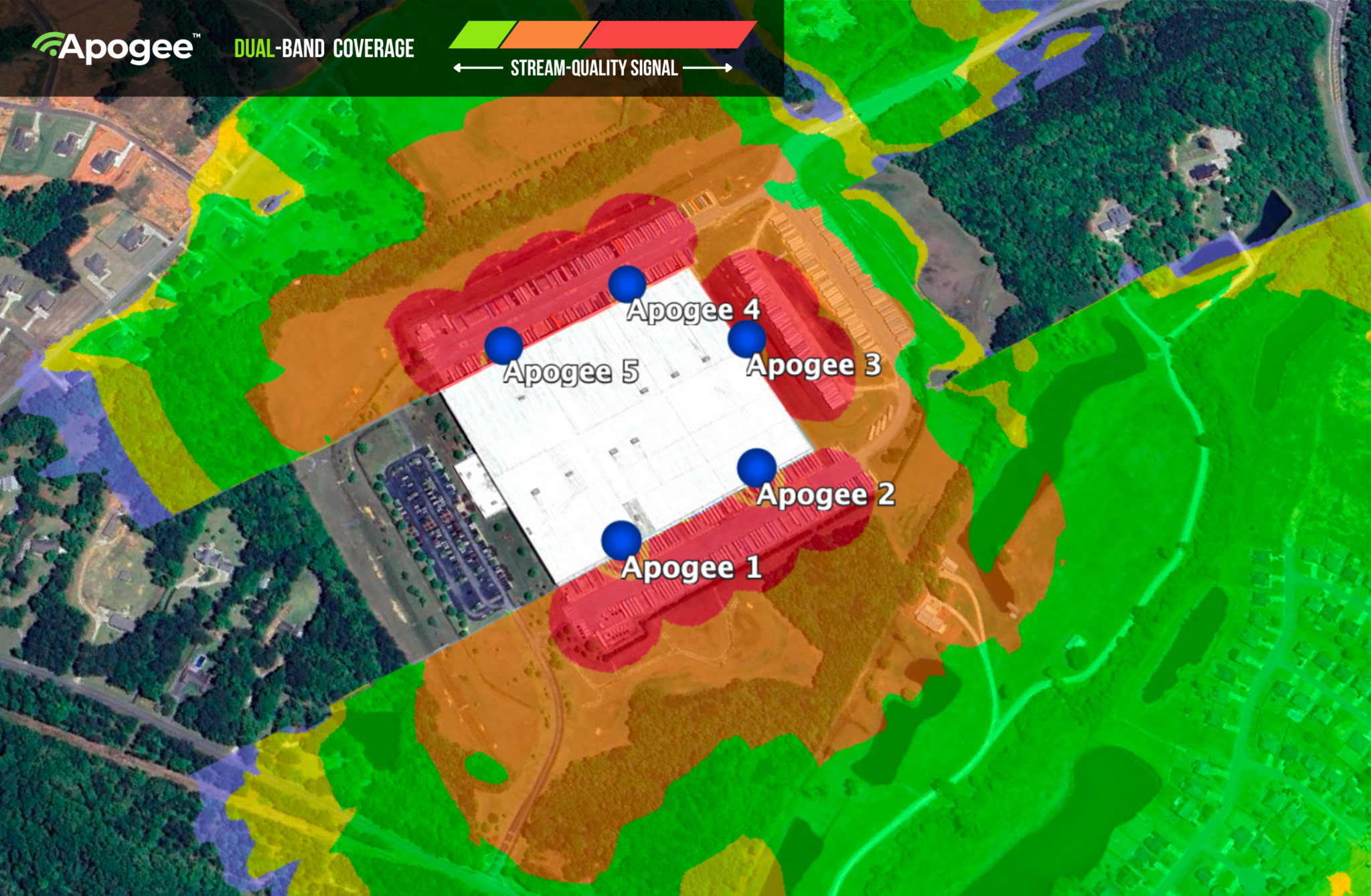
Inside the building, the 180 MP covers racked aisles from end walls, passive and plug-and-play with existing access points. Outside, one 360 can cover the trailer yard, dock apron, and parking so drivers, spotters, and gate cameras stay connected on the same network.
proof
A Fortune 500 retailer standardized on 2 to 3 Apogees per site across 1000-plus locations
The architecture that replaced per-aisle access points in lots and garden centers is the same one that works between racking: fewer, higher-gain antennas connected to the access points already on site. The corporate standard is now 2 to 3 Apogees for 20-plus acre coverage per location.
Read the case study
Warehouse Wi-Fi FAQ
Will Apogee work with our handheld scanners?
Yes. Scanners are exactly the low-power devices Asymmetric Gain is designed around, so the antenna helps the handheld reach back over distances a ceiling access point alone cannot support.
How many antennas does a typical building need?
Deployments often cut access-point counts by 70 to 83%. The honest answer depends on the racking plan and steel, which is why every project starts with RF modeling against the actual floor plan.
Does it survive the freezer section?
The 180 is rated from -40 to +70 degrees C and the 180 MP from -40 to +60 degrees C, so cold storage and unconditioned buildings are inside the operating envelope.
Do we have to rip out what we have?
No. Apogee connects to the access points you already run. Most sites keep their controller and retire only the access points the antennas make redundant.